Key takeaways
- Wood fences last longer with a stain or sealer every few years.
- Cleaning algae and mildew keeps vinyl and wood bright.
- Walk the fence each spring and fall and fix small problems early.
- Keep soil, mulch and plants away from the bottom of boards.
Walk the fence
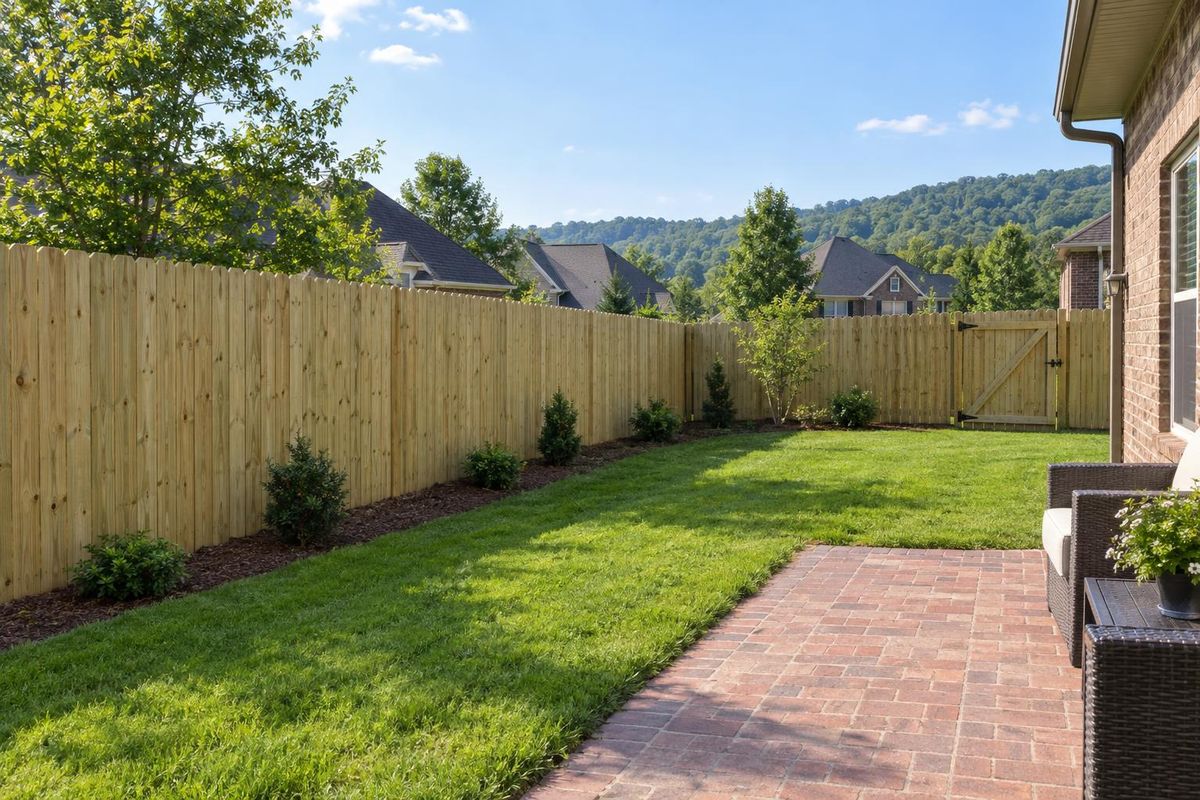
Twice a year, walk the line. Look for loose boards, rust on fasteners, soft spots at the base of posts, leaning sections and gate hardware that has loosened. Fixing one board takes minutes, and fixing a failed post takes a day.
Trim plants and keep sprinklers from soaking the same boards over and over.
Clean it
Green algae and mildew grow in shade and humidity. A gentle wash with a soft-wash solution lifts them from vinyl and wood. Pressure that is too high can gouge wood, so keep it low and wide.
Let wood dry fully before applying any finish.
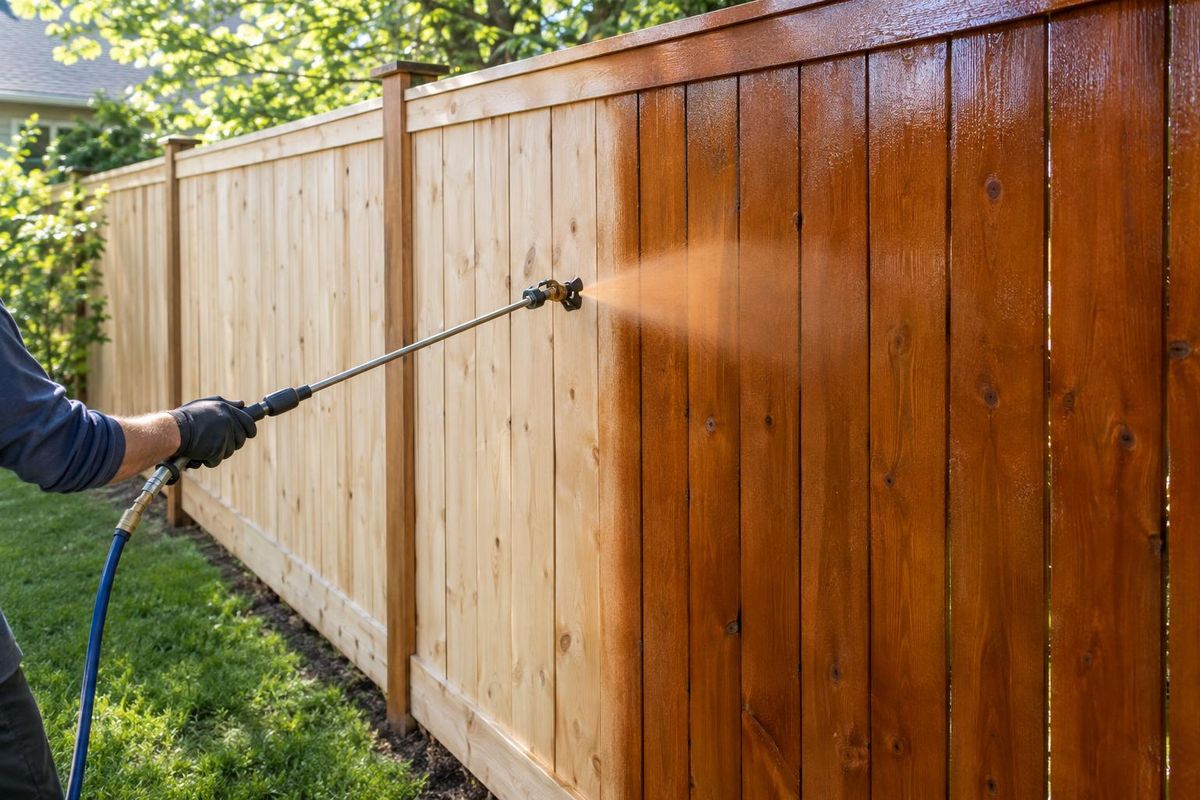
Stain or seal wood
A good stain or sealer slows weathering, resists moisture and keeps color. New treated lumber needs time to dry before it takes a finish, often several weeks. Many finishes need to be refreshed every two to three years.
Clear sealers show the wood grain, and tinted stains give richer color and better sun protection.
Fix small problems early
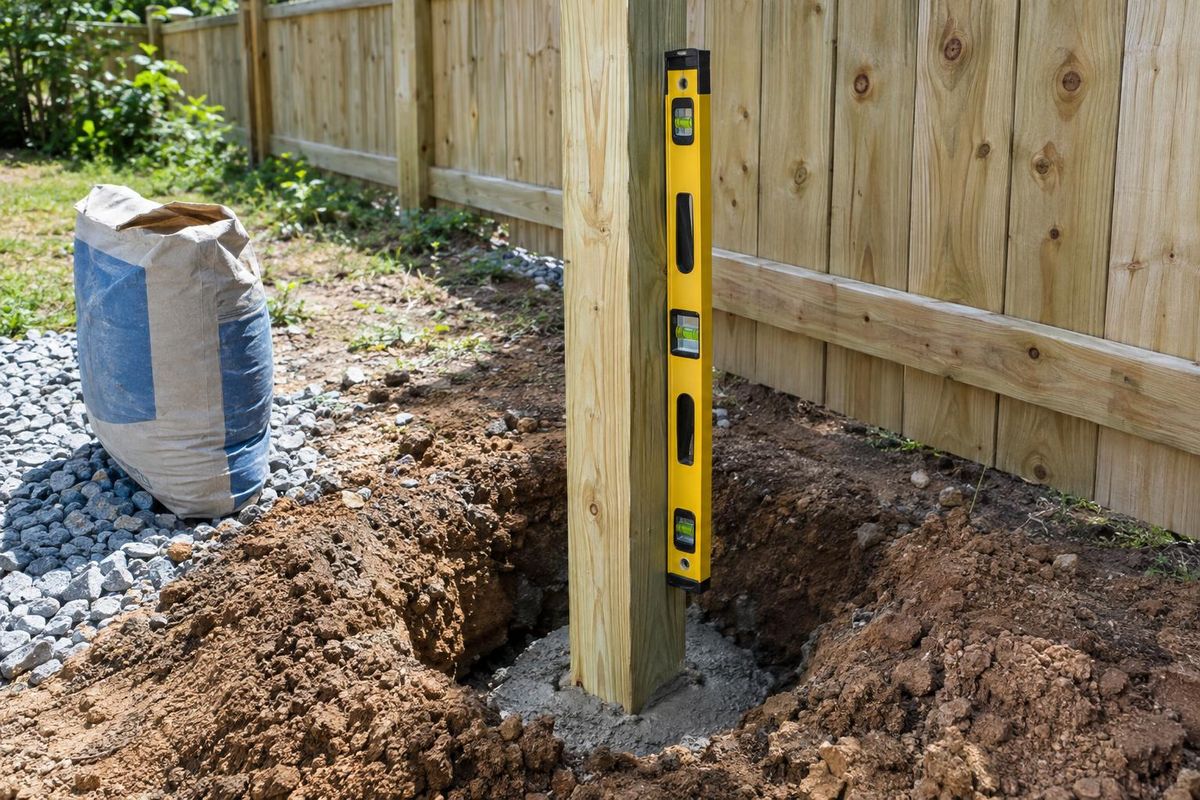
Replace cracked boards, tighten loose screws, lubricate hinges and adjust latches. Straighten a leaning post before it pulls the whole run over.
Small fixes keep a fence strong and avoid replacing it sooner than you need to.
Quick answers
How often should I stain a fence?
Every two to three years is common, depending on the product and the sun.
Can I stain a new fence right away?
Wait until the wood has dried. We can check moisture and tell you when it is ready.
What about vinyl and aluminum?
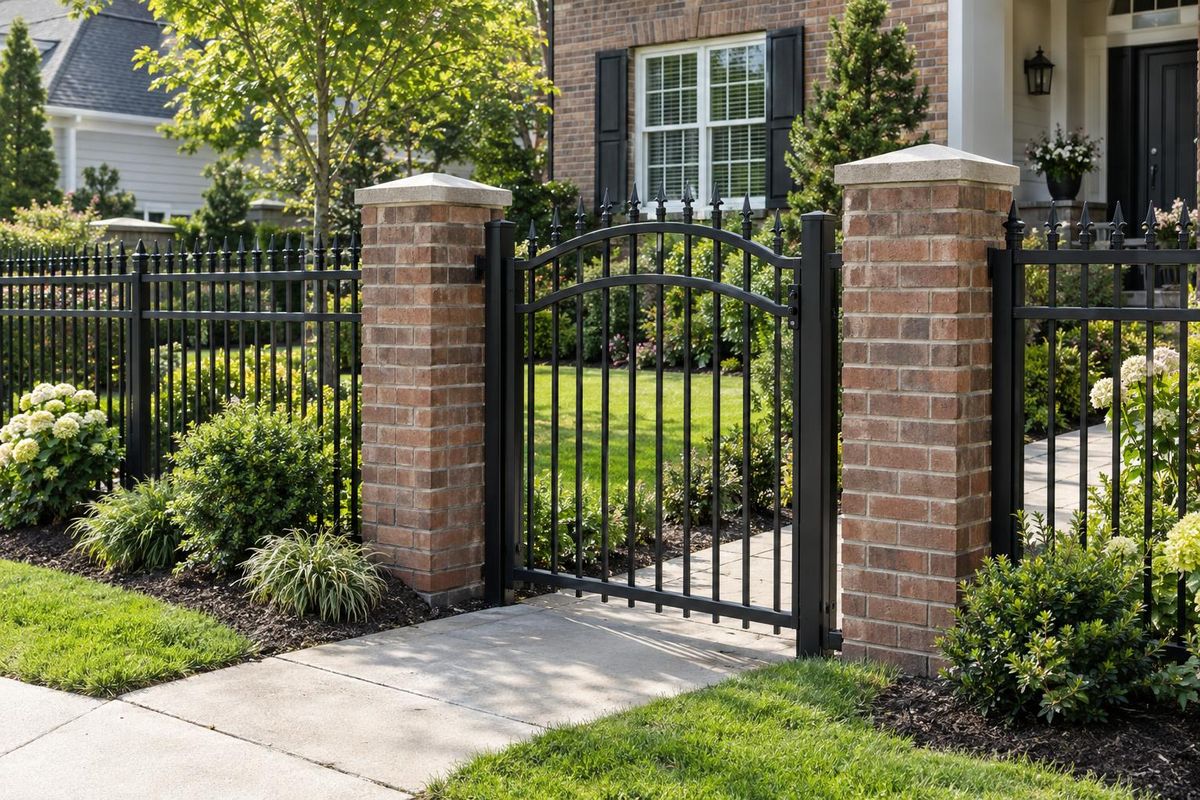
They need only an occasional wash and a check of hardware.