Key takeaways
- A leaning fence usually means failing posts or footings.
- Soft, rotted wood at the ground line is a post problem, not a board problem.
- If most posts are failing, replacement is often wiser than repair.
- Storm damage should be secured quickly to protect pets and neighbors.
Look at the posts
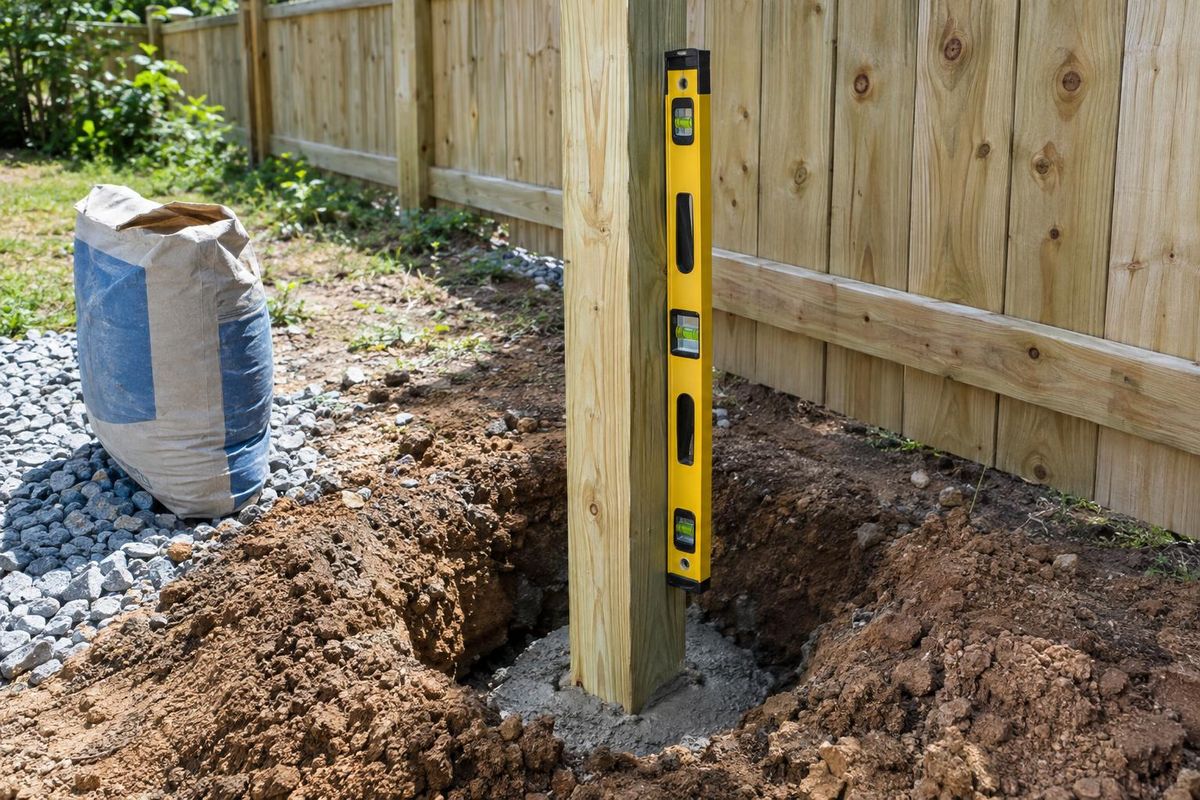
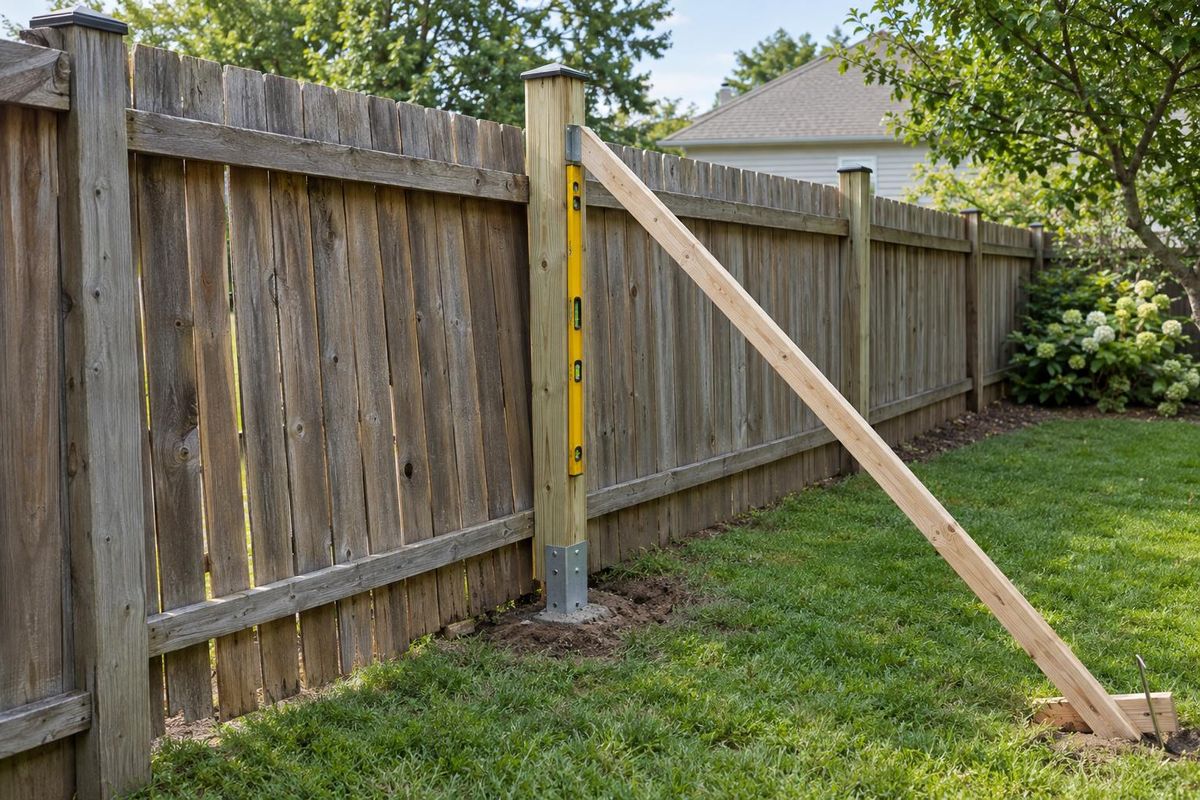
Push on each post. A post that moves in the ground or is soft at the base is failing. A few bad posts can be replaced, but when many are soft the fence has reached the end of its life.
Check the concrete too. Cracked or heaved footings mean the post has lost its support.
Look at rails and boards
Loose rails, split boards and missing pickets can usually be fixed. Cupped or warped boards on a sound frame can be replaced without touching the posts.
If boards fall off as soon as you fasten them, the rails may be rotted.
Look at the gates
Gates that drag, will not latch or hang crooked often need new posts or braces rather than just adjustment. Automatic gates that struggle may have heavy hinges or a worn operator.
A sagging gate is also a safety problem, especially at a pool.
Repair or replace
Repair makes sense when the posts are sound and the damage is in a few places. Replacement makes sense when most posts are failing, many boards are rotted or repairs would be as large as a new fence.
We inspect the fence, explain what we find and give you honest options.
Quick answers
How long does a wood fence last?
It varies with the wood, the soil and the upkeep. Well-built and maintained fences last a long time.
Can a leaning fence be fixed?
Often yes, if the boards and rails are sound. We reset or replace posts.
What should I do after a storm?
Make the area safe, take photos and secure loose pieces. Then have the damage repaired.