Key takeaways
- A pool barrier should be tall, hard to climb and have no large gaps.
- Gates should self-close and self-latch and swing outward, away from the pool.
- Local codes set the exact rules, so confirm them first.
- Alarms and covers add layers of protection but do not replace a fence.
Why barriers matter
Drowning is a leading cause of accidental death for young children, and it can happen in seconds. A good barrier is the first layer of protection, because it keeps small children from reaching the water without an adult.
A barrier works only when it is complete, which means gates that always latch.
What a good barrier looks like
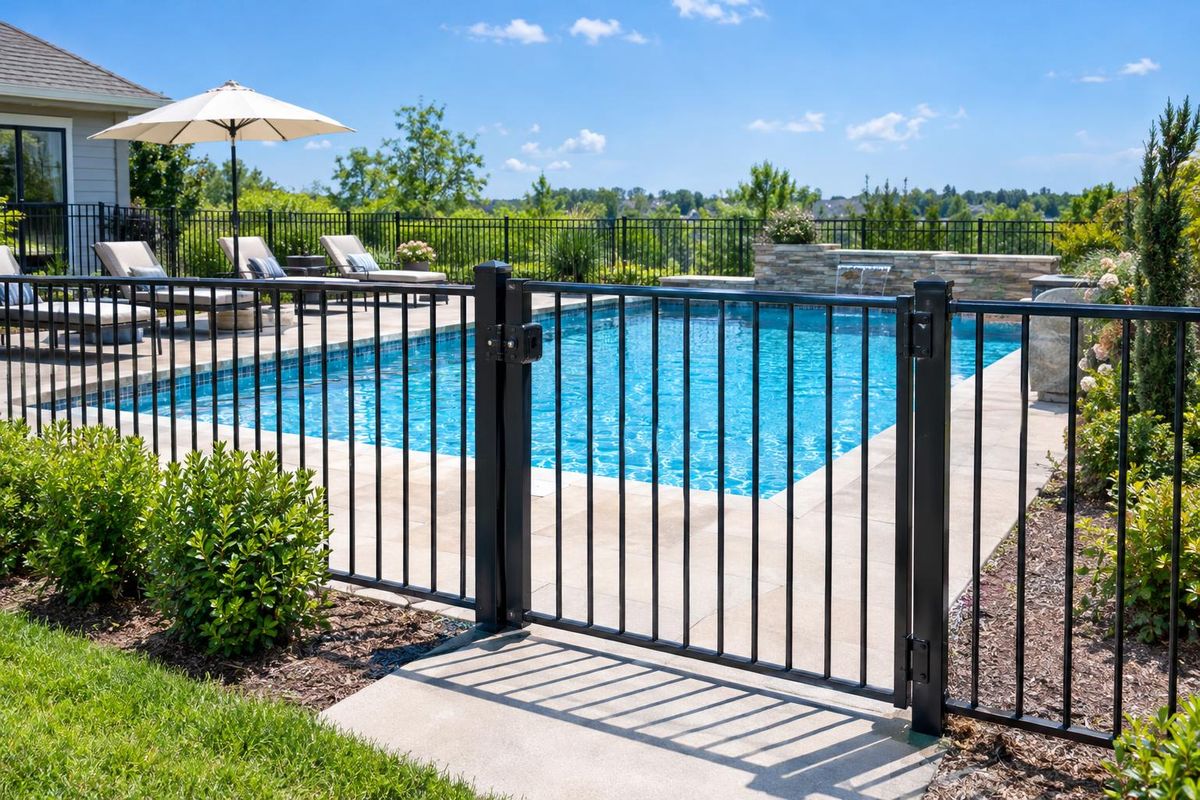
Many codes call for a barrier at least four feet tall with vertical bars spaced closely enough that a small child cannot pass through, and no horizontal rails on the outside that act like a ladder. Aluminum, glass and mesh fences are common because they are clear and hard to climb.
Trees, furniture and equipment near the fence can give a climber a boost, so they should be kept back.
Gates and latches
A pool gate should close and latch by itself every time, even if someone lets it go. The latch is typically placed high on the pool side where small children cannot reach it, and the gate should open away from the pool.
Hinges and latches wear, so test the gate regularly and adjust or replace parts when it does not close firmly.
Check your local rules
Pool barrier rules differ by city and may depend on when the pool was built. Some rules allow a house wall as part of the barrier with alarms on doors.
We review the rules that apply to your pool before we design the fence.
Quick answers
How high should a pool fence be?
Four feet is a common minimum. Your local rules decide, and taller is often better.
Is a pool cover enough?
A cover helps, but a fence is still the strongest primary barrier.
Can an existing fence be part of the barrier?
Sometimes, if it meets height, spacing and gate rules. We can check it.