Key takeaways
- Wood is natural and flexible in style but needs finishing.
- Vinyl is clean and low-maintenance but limited in color and repair options.
- Aluminum is rust-free and elegant, and does not give privacy.
- Chain link is strong and practical, and is open to view.
Wood
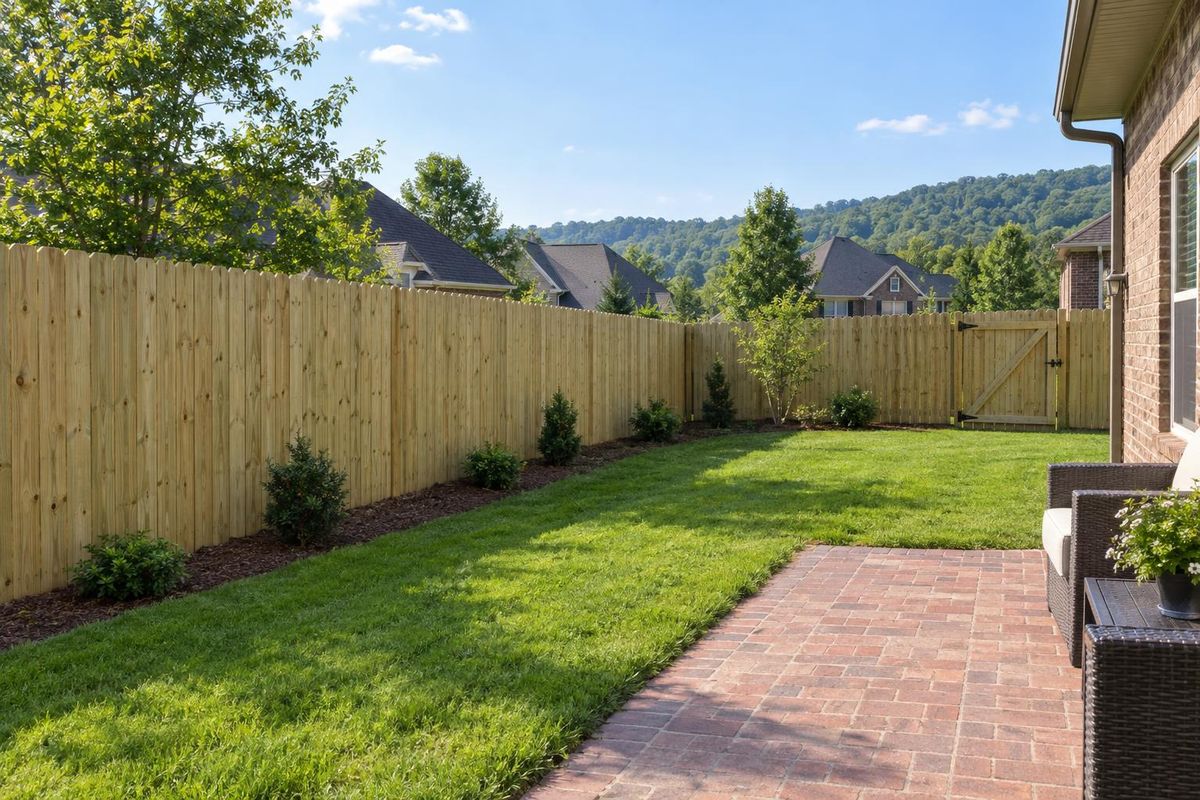
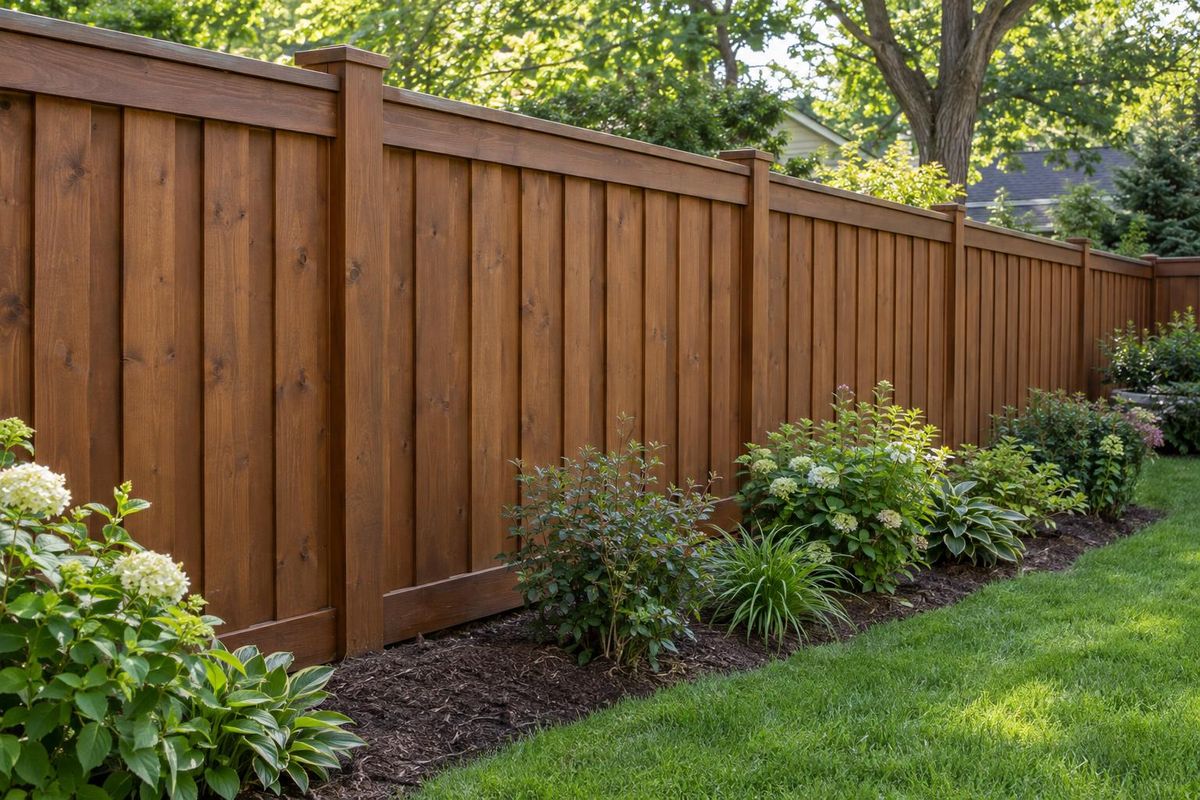
Wood is the most versatile fence material. It can be built tall for privacy, short for a picket look, stained or painted any color and repaired board by board. Cedar resists rot naturally, and pressure-treated pine is a sturdy, practical choice.
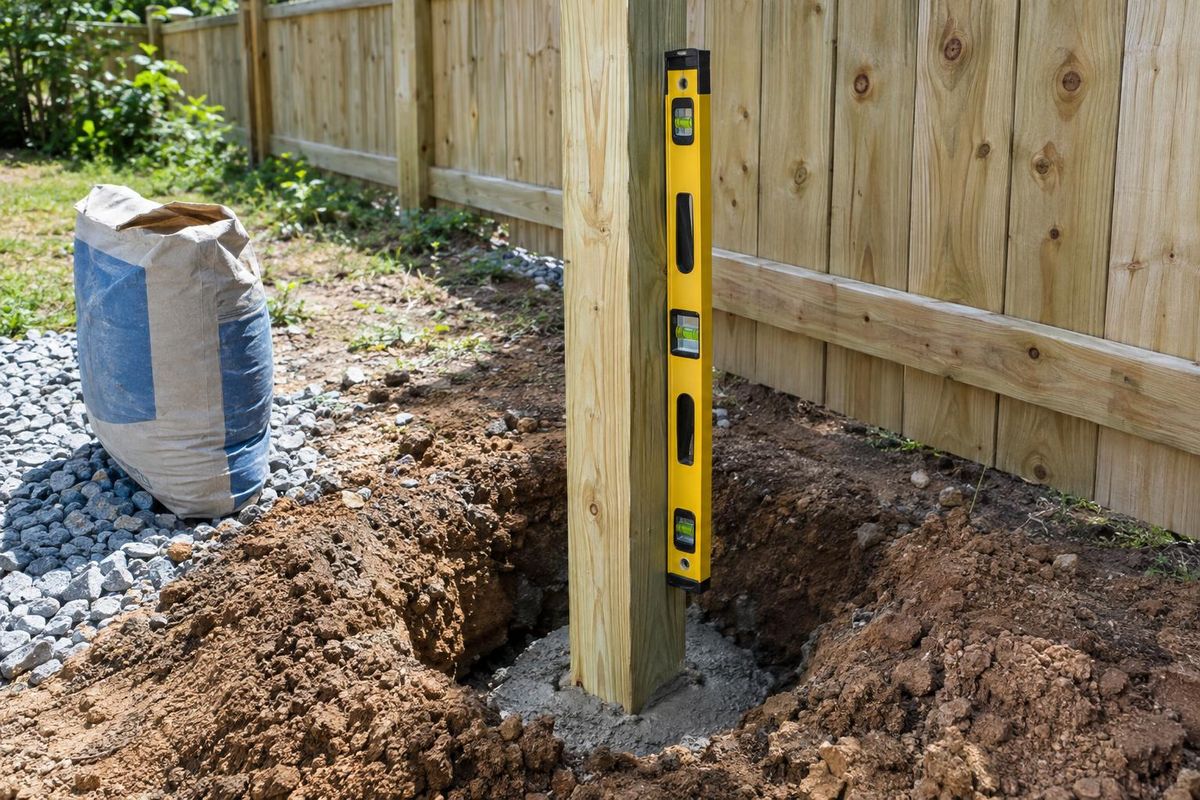
The tradeoff is upkeep. Wood weathers in the sun and moisture, so it needs a stain or sealer every few years, and posts at the ground line are the first thing to rot.
Vinyl
Vinyl does not rot, peel or need paint, and a rinse with a hose keeps it bright. It is popular for privacy fences and for picket and rail styles.
Vinyl has a limited color range, can crack from hard impacts and cannot be re-colored, but panels can be replaced if damaged.
Aluminum
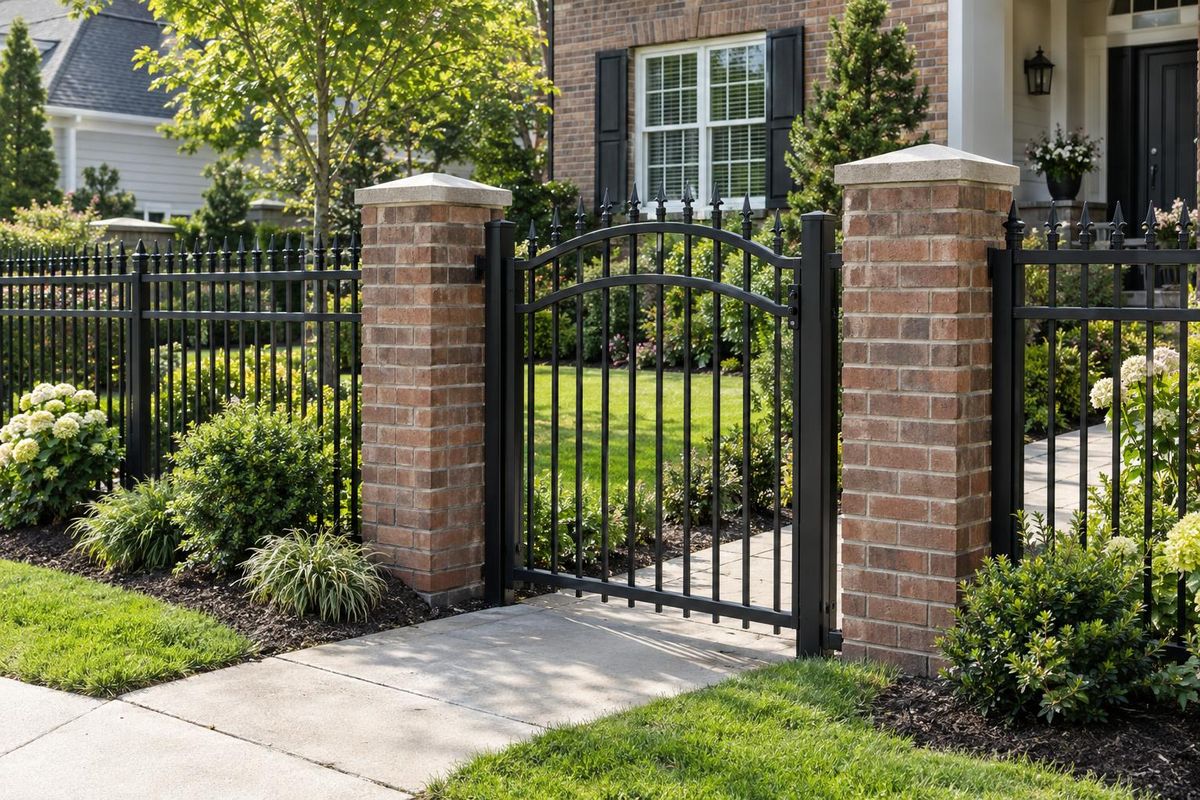
Aluminum fencing is open, elegant and will not rust. It is the common choice around pools and in front yards, and panels can follow slopes.
It does not provide privacy and is lighter than steel, so it is not meant for heavy impact or security.
Chain link
Chain link is strong, fast to install and long lasting. Coated black or green versions blend into the landscape, and privacy slats can be added.
It is see-through, which is a feature for dog runs and ball fields and a drawback when you want privacy.
Quick answers
Which fence lasts the longest?
Aluminum, steel and chain link last a very long time. Vinyl lasts well, and wood lasts as long as its upkeep and posts do.
Which fence needs the least maintenance?
Chain link, vinyl, aluminum and composite need the least.
Which suits a sloped yard?
Aluminum and wire fences follow slopes easily. Wood and vinyl can be stepped.